
Why CSA Certification Matters for CNC Machines (and Why Educators Should Care)
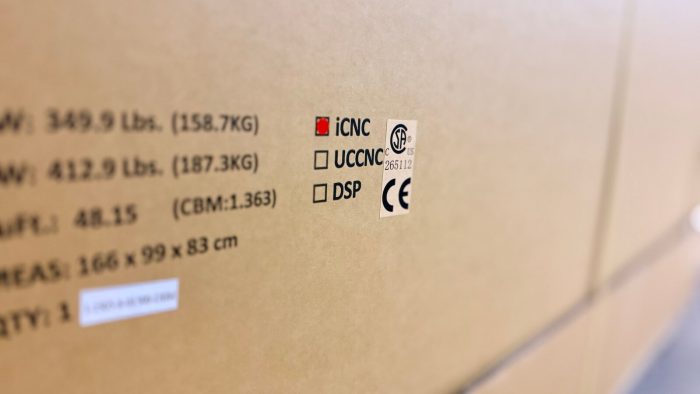
When we build CNC machines for classrooms and workshops, safety isn’t an afterthought, it’s at the core of what we do. That’s why every Simply Technologies machine that we sell to Canadian schools carries the CSA (Canadian Standards Association) mark. It’s not just a sticker, it’s proof of independent electrical and mechanical safety testing, and a promise that your students are learning on equipment that meets rigorous national standards. That matters to us.
A Little History
Founded in 1919 as the Canadian Engineering Standards Association (CESA), CSA was created in response to a critical need for technical interoperability (I know, fancy word! Just think “ability to operate in conjunction with each other”), and safety during World War I. The organization’s first standards? Things like steel railway bridges by 1920 and Canada’s electrical code by 1927. In 1944, CESA was renamed CSA, and the now-recognizable certification mark was launched in 1946. Since then, CSA’s influence has grown across sectors – from consumer safety to healthcare infrastructure, and even workplace mental health standards.
Why CSA Matters in the Classroom
“That’s all great, but why does it matter for us in the classroom, though?”
I’m so glad you asked! Haha. For one, it is a requirement that passes through several levels:
1. CSA publishes standards like CSA Z432 – Safeguarding of Machinery and CSA C22.2 – Electrical Equipment. These cover requirements for protective guards, interlocks (relay switches), and emergency stops. While CSA writes and maintains the standards, they are not laws on their own.
2. Provinces adopt CSA standards into their occupational health and safety regulations. For example:
-
Ontario’s Occupational Health and Safety Act (OHSA) and regulations for industrial establishments mandate that machines must be “guarded” and operated safely. The accepted interpretation is that CNC machines in schools require full safety enclosures with interlocks that stop the spindle if the door is opened.
-
Other provinces mirror this by referencing CSA standards directly in their safety codes.
3. School boards and provincial ministries of education typically add further requirements when students are involved. Because minors and unskilled operators are at higher risk, safety enclosures with relay switches are mandatory for any CNC machine installed in every educational environment in Canada.
These standards reach far beyond just requiring safety enclosures. CSA certification applies to every aspect of a CNC machine – from wiring and grounding, to electronic components, to emergency circuits and insulation. It ensures that every system has been tested not just for performance, but for reliability and protection, so educators and students can trust the machine from the inside out.
Why CSA Matters to Simply Technologies
Seeing the CSA mark builds confidence. It tells schools and educators that the equipment is built to last, backed by a globally respected safety organization, and worthy of classroom investment.
For us, CSA certification is not just a checkbox – it is a pledge. A pledge that every machine you bring into your school has been designed, tested, and approved for real-world learning environments. It is our assurance that the technology we provide meets the highest safety and reliability standards, so teachers can focus on teaching and students can focus on creating.
When students can safely turn their ideas into prototypes, everyone wins. That is why CSA certification is at the heart of our commitment to education and to the future of Canadian manufacturing.
—
Peace & Grace,
Jeremy Stevenson