
Key Takeaways
- CNC automation allows a 3–10 person shop to match the speed, precision, and consistency of much larger manufacturers without adding headcount.
- Modern CNC routers and mills, like those integrated by Simply Technologies, can turn multi-hour manual jobs into minutes while maintaining tolerances in the 0.001” range.
- Affordable, incremental automation starting under a typical $20k–$40k capex budget is now realistic for small cabinet, signage, metal fab, and job shops.
- The real competitive edge comes from combining CNC hardware with smart workflow automation: quoting, nesting, scheduling, and unattended night runs.
- This article provides concrete, step-by-step ideas for using CNC automation to win work against larger manufacturers without expanding your workforce.
Why CNC Automation Levels the Playing Field for Small Shops
Between 2020–2025, tight labor markets and shorter lead-time expectations have pressured small manufacturers to match big-shop efficiency. Customers no longer accept longer timelines just because a shop is smaller. The competitive market demands precision, speed, and consistency regardless of how many employees you have on the floor.
CNC automation removes dependence on manual skill alone and standardizes quality across every piece you produce. A 5-person shop running a well-configured CNC machine can hit the same tolerances as a 50-person plant—often down to 0.005 inches for millwork and even tighter for metal parts. The technology handles the repetitive precision work while your team focuses on setup, quality checks, and customer relationships.
Consider the contrast between workflows:
| Manual Workflow | CNC-Automated Workflow |
| Hand layout with tape and pencil | CAD file with exact dimensions |
| Circular saw or bandsaw cutting | CNC router cuts from nested sheet |
| Drill press for hole patterns | CNC drills all holes in one setup |
| Hand routing for profiles | CNC profiles edges automatically |
| Multiple setups and measurements | Single file drives entire process |
Simply Technologies focuses on making this transition practical. Their approach integrates CNC machines into existing small-shop processes rather than forcing a full “Industry 4.0” overhaul. The goal is not to imitate a giant factory but to become a fast, flexible specialist that still matches big manufacturers on quality and on-time delivery.
Core Advantages of CNC Automation for Small Shops
The advantages of CNC automation extend far beyond simply cutting faster. When you understand these benefits clearly, the investment decision becomes straightforward.
Speed and throughput: One modern CNC router or mill can replace multiple manual steps—cutting, drilling, profiling, and sometimes engraving—while running 10–12 hours per day consistently. This productivity multiplier is something manual operations simply cannot match.
Repeatability and consistency: Once a program is proven, the same part can be reproduced months later with no quality drift. This is critical for clients who need matching components across multiple orders or expect identical replacement parts years down the line.
Material waste reduction: Digital nesting software optimizes how parts fit on sheet goods, reducing scrap rates by 15-25%. With plywood, aluminum sheet, and composite material costs rising sharply since 2021, this directly impacts your profit margins.
Precision that builds reputation: CNC machines maintain tolerances that would require exceptional skill and time to achieve by hand. Your shop can consistently deliver the precision that wins premium contracts.
Labor leverage: Instead of needing three skilled workers to match one CNC machine’s output, you can redeploy existing staff to higher-value tasks like programming, customer communication, and complex assembly work.
For many small shops, the first CNC machine is paid off in 12–24 months when tied directly to high-margin recurring work—cabinet components, architectural signage, production brackets, and similar repeat jobs.
Speed and Throughput: Competing on Lead Time
Lead time often decides who wins the contract. When a customer needs parts in three days and your competitor promises two weeks, you get the work. CNC automation makes those short timelines possible.
Concrete example—metal brackets: A 30-part aluminum bracket job that used to take one full day across saw, drill press, and deburring now runs in under two hours on a CNC mill with automated probing. The machine handles positioning, drilling, and profiling while the operator manages other tasks.
Concrete example—cabinet shop: A small cabinet operation can go from hand-cutting a kitchen over 2–3 days to cutting nested cabinet parts for an entire house in a single 4–5 hour CNC run. The efficiency gain is dramatic enough to change which projects you can profitably accept.
Think about weekly capacity like this:
| Week Schedule | Manual Shop | CNC-Automated Shop |
| Monday | 1 kitchen started | 2 kitchens cut, 1 assembled |
| Tuesday | Cutting continues | Assembly continues, quoting new work |
| Wednesday | Drilling, routing | Third kitchen cut |
| Thursday | Assembly begins | Delivery and install prep |
| Friday | Assembly continues | Fourth kitchen started |
Simply Technologies can help small shops configure tool changers, workholding, and job queuing so machines cut continuously with minimal operator intervention. This is where the real production gains appear—not just faster individual cuts, but fewer pauses between jobs.
Versatility: Opening New Revenue Streams
A single CNC platform can serve multiple markets, allowing your small business to expand into new industries without purchasing specialized equipment for each one. This versatility creates opportunities that manual shops struggle to capture.
Product categories you can add with CNC automation:
- Custom cabinet components (doors, drawer faces, complex joinery)
- 3D signage and dimensional lettering
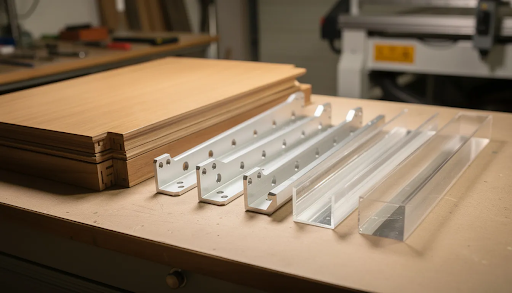
- Aluminum fixtures and brackets for local manufacturers
- Acrylic displays and POP materials
- CNC-cut jigs and fixtures for other local businesses
- Architectural millwork with complex profiles
- Prototype parts for startups and inventors
The 2024–2026 market shows strong demand for customized interiors, small-batch consumer products, and short-run prototypes for startups. Large manufacturers often avoid this mixed, low-volume work because their operations are optimized for long runs. Your shop can capture this niche precisely because you’re smaller and more agile.
CNC-controlled tooling changes let a shop switch from cutting MDF to aluminum on the same day. This ability to handle mixed small-batch work becomes a service advantage that attracts clients who need flexibility.
Simply Technologies can integrate CAD/CAM workflows so design files from tools like Fusion 360, SolidWorks, or CabinetVision move smoothly to the CNC without manual re-entry. This streamlined file handling saves hours of programming time and reduces errors.
Cost, ROI, and Competing With Big-Budget Factories
Capital cost is the main worry for small shops considering CNC automation. The money involved feels significant, and the fear of underutilization is real. But the math often works more favorably than owners expect.
Simple ROI calculation: (Labor hours saved per week × fully loaded hourly rate) + scrap reduction + extra jobs won = monthly benefit
Compare this against your monthly payment or depreciation on the CNC machine.
Specific example: A 4-person wood shop saves 20 labor hours per week at $35/hour ($700/week or $3,000/month). They reduce monthly scrap by $500 through better nesting. Their CNC payment is $950/month. Net monthly gain: approximately $2,550—before counting additional jobs they can now accept.
Big manufacturers spread machine costs across huge volumes. Small shops win differently: by combining CNC efficiency with premium, custom, or rush work where margins are higher. You’re not competing on volume; you’re competing on capability, speed, and service.
Simply Technologies can help scope realistic starting budgets—for example, under $25k–$60k for a first CNC cell with software—and map them to expected payback periods based on your actual work mix. This focused approach to investment helps manage cash flow while building capabilities.
Labor, Skills, and Operator-Friendly Automation
The ongoing shortage of experienced machinists and cabinetmakers affects shops across the country. Hiring qualified workers takes months, and training from scratch takes years with traditional methods. CNC automation protects your shop from these hiring bottlenecks.
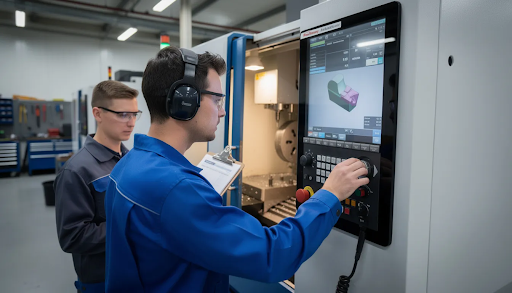
Modern CNC controls feature touchscreens, guided setup routines, and simplified interfaces that make it realistic to train a new operator in weeks, not years, for basic loading and program execution. The machine handles the precision work that used to require decades of experience.
Position CNC automation not as “replacing people” but as shifting your existing workforce to higher-value work:
| Traditional Role | CNC-Enhanced Role |
| Manual cutting all day | Program verification and optimization |
| Repetitive drilling | Quality inspection and customer communication |
| Hand routing profiles | Setup improvements and process development |
| Counting and tracking manually | Managing digital job flow |
Common task assignments after automation:
- Automated: Repetitive loading/unloading, pallet changes, basic cutting cycles
- Human-focused: Setup verification, first-article checks, complex fixturing, client communication, programming refinements
Simply Technologies emphasizes implementation support and operator training so even a 2–3 person shop can adopt CNC automation without needing a dedicated full-time engineer. The focus is on getting your existing team productive quickly.
Realistic Automation Path: From First CNC to Lights-Out Cells
You don’t need to build a fully automated factory on day one. The most successful small shop automation follows an incremental path that matches investment to proven capability.
Starting point: One CNC router or mill added to an existing manual shop, running a few hours per day for the most repetitive parts. This is where you learn the workflow, develop your first programs, and build confidence with the technology.
Next stage: Add basic automation like probing cycles for automatic tool zeroing, part macros for repeat setups, standardized fixturing that speeds changeovers, and digital job sheets connected to the CNC controller. These process improvements multiply your machine’s effective capacity.
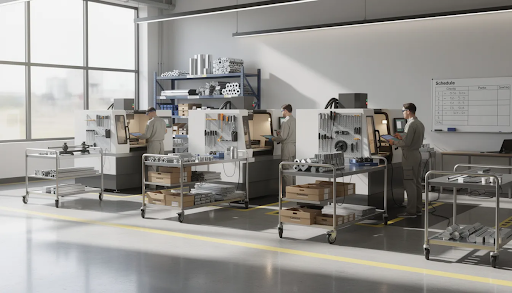
Advanced options: Automatic tool changers, pallet systems, or cobots for loading/unloading enable semi-lights-out running in evenings or weekends. This is where you develop the ability to operate 24/7 without proportional labor increases.
Simply Technologies can help design this incremental roadmap so you don’t overbuy on day one but still keep an upgrade path toward higher automation over 2–5 years. The goal is sustainable growth, not overcommitment.
Digital Workflow: Software, Data, and Winning Quotes
Software is the “invisible” part of CNC automation that often decides whether a small shop truly competes with larger manufacturers. Hardware cuts parts, but software determines how fast you can go from customer inquiry to delivered product.
Key software components:
- CAD software: Design and engineering (Fusion 360, SolidWorks, SketchUp)
- CAM software: Toolpath generation and machine-specific code
- Nesting software: Sheet optimization for material yield
- Shop management tools: Scheduling, tracking, and quoting
When these tools are integrated, a shop can go from customer drawing to CNC-ready program and quote in hours instead of days. This speed often wins the order before competitors even respond with their initial estimate.
Simply Technologies specializes in tying CNC machines into existing software stacks or recommending lightweight tools that small shops can realistically manage and maintain without dedicated IT staff.
Example workflow: A cabinet shop receives a request for 50 drawer boxes. Using stored CNC programs and material libraries, they generate an accurate quote with known cycle times and material costs in 30 minutes. The client receives a professional proposal the same day while competitors are still scheduling site visits.
Choosing the Right CNC Automation Setup for Your Small Shop
Selecting the right CNC automation requires honest assessment of your current operations and realistic projections of where you want to grow. Use this checklist as a starting point:
Clarify your primary materials:
- Plywood and sheet goods → Router-style CNC with adequate bed size
- Solid wood and hardwoods → Consider spindle power and dust collection
- Aluminum and light metals → Higher rigidity machining center
- Plastics and composites → Cooling and chip evacuation needs
Define target tolerances and finishes:
- General woodworking: ±0.010” typically sufficient
- Architectural millwork: ±0.005” for consistent fit
- Metal parts: ±0.001” may require higher-precision equipment
Think through workflow integration:
- Infeed and outfeed space for sheet handling
- Dust collection capacity and connection points
- Chip management for metal work
- Material flow between saws, CNC, assembly, and finishing areas
Consider your growth trajectory:
- Current average order size and mix
- Target order profile in 12–24 months
- Space available for expansion or additional equipment
Simply Technologies can perform a brief remote or onsite assessment of your shop’s floor, product mix, and order patterns to recommend a right-sized CNC automation package that fits your budget and growth plans.
How Simply Technologies Helps Small Shops Automate Confidently
Simply Technologies positions itself as a partner focused on small and mid-sized shops rather than high-volume mass producers. This focus shapes every recommendation and implementation they deliver.
Full lifecycle support:
- Needs assessment based on your actual work, not generic assumptions
- Hardware and control selection matched to your budget and product requirements
- Software integration connecting your design tools to the CNC floor
- Operator training that gets your team productive quickly
- Post-install support when questions arise during real production
Common project types:
- Adding a first CNC router to a cabinetry shop transitioning from manual methods
- Automating fixture production in a metal fab shop to free skilled welders for assembly work
- Upgrading legacy machines with modern controls for precision improvements
- Integrating CAD/CAM workflows for architectural millwork with complex profiles
Simply Technologies emphasizes practical, budget-conscious solutions that can be expanded later. This approach helps owners avoid over-specifying expensive equipment that sits underutilized or under-buying capabilities that create bottlenecks within months.
The campaign to help small shops compete isn’t about selling the biggest machine—it’s about enabling sustainable growth through right-sized automation.
Ready to explore how CNC automation could enhance your shop’s capabilities? Contact Simply Technologies through their website to discuss your current workflow, typical order sizes, and 12–24 month growth plans. A brief conversation can clarify whether now is the right time to invest—and what that investment should realistically look like.
FAQ
How long does it usually take a small shop to get productive with its first CNC machine?
Most small shops can go from delivery to running real customer jobs in 2–6 weeks, depending on complexity and operator experience. The first week is typically spent on installation, calibration, and basic training, with the following weeks focused on building reusable programs and standardized fixtures. Simply Technologies supports this ramp-up with setup assistance and training plans tailored to a shop’s specific products, helping you avoid the common mistake of spending months on practice projects instead of production work.
Can I retrofit CNC automation into older manual equipment instead of buying new machines?
Some older mills and routers can be upgraded with new controls, drives, and probing systems, but not every machine is a good candidate for retrofit. The decision depends on mechanical condition, available parts, and whether the frame provides adequate rigidity for CNC precision work. Consider the total cost of retrofit versus a new, fully supported machine, especially regarding long-term reliability and potential downtime. Simply Technologies can evaluate your existing equipment and advise whether a retrofit or new CNC purchase will deliver better 3–5 year ROI for your specific situation.
What kind of maintenance does CNC automation require in a small shop?
Routine maintenance includes daily cleaning of the table and ways, regular lubrication checks, filter changes for dust collection and coolant systems, and periodic alignment and backlash verification. Most shops schedule deeper maintenance during planned low-production periods—Friday afternoons or slow seasonal weeks. The tasks are predictable and documented, making them manageable even without a dedicated maintenance person on staff. Simply Technologies provides maintenance guidelines and, where available, remote support or scheduled service visits to keep your equipment running reliably.
Do I need a full-time programmer to run CNC automation effectively?
Most small shops do not need a dedicated programmer when starting out. One cross-trained employee can handle both programming and machine operation for typical production volumes. Template-based CAM setups and parametric part libraries reduce programming time significantly for repeat work—what once took hours can become a 15-minute task. Simply Technologies helps set up standard workflows and templates during implementation so future programming work requires less specialized expertise and less time per job.
What if my work is highly custom and low volume—does CNC automation still make sense?
CNC automation delivers value even for low-volume, high-mix work by speeding up one-off setups and improving first-time-right quality. A prototyping shop or custom furniture maker can use CNC for joinery, templates, and complex contours that would be slow or impossible to execute consistently by hand. The environmental footprint of reduced scrap and the overall profitability gains from fewer errors apply regardless of batch size. Simply Technologies can help analyze your part history to identify which operations benefit most from CNC, ensuring your investment targets the work where it creates the greatest return.