
Key Takeaways
- A fully enclosed CNC machine contains chips, dust, and noise within sealed panels and locking doors, making it safer for shops and classrooms than open-frame alternatives.
- Simply Technologies focuses on enclosed CNC routers built for real-world production and education environments, not just hobby-level desktop systems. Explore the full CNC lineup here.
- Proper door interlocks, emergency stops, and CSA-compliant components make enclosed CNC systems suitable for high schools, colleges, and maker spaces where multiple users share equipment.
- Laser capability can be added safely when paired with a well-designed enclosure, proper exhaust, and appropriate interlocks. View laser systems and accessories here.
- For help choosing an enclosed CNC or laser-capable system matched to your application, call 800-288-2961.
What Is an Enclosed CNC Machine?
An enclosed CNC machine is a router or CNC mill where the working area is completely surrounded by rigid panels and features locking doors, in contrast to open-frame desktop CNC machines where the gantry, spindle, and workpiece are exposed. The enclosure creates a physical and operational barrier between the operator and the cutting process, containing chips, dust, and airborne particles within the machine cavity.
Simply Technologies focuses on enclosed CNC router systems designed for production shops and educational labs, built to handle aggressive cutting in wood, plastics, aluminum, and soft metals rather than just light engraving work. Browse the CNC product lineup to see how these systems differ from entry-level desktop machines.
Common enclosure materials include powder-coated steel frames, polycarbonate or acrylic viewing windows, and gasketed doors with proper seals. These components are selected for durability under real cutting conditions, not just aesthetic purposes. The construction must withstand chip loads from machining aluminum, brass, and composites, along with any coolant or mist used during operation.
- Fully enclosed does not mean limited in size. An enclosed CNC can range from compact benchtop footprints to mid-size shop routers that still fit through standard 36” doors.
| Feature | Open-Frame CNC | Enclosed CNC |
| Chip containment | Minimal | Full |
| Door interlocks | None | Standard |
| Noise reduction | None | 10–15 dB reduction |
| Suitable for classrooms | Challenging | Yes |
| Dust collection integration | Requires aftermarket boot | Built-in ports |
Why Choose an Enclosed CNC Machine in 2026?
Safety expectations in shops, schools, and maker spaces have increased significantly through 2024–2026. Insurance requirements, institutional risk assessments, and user expectations now favor enclosed CNC systems over open-frame alternatives for any environment where multiple operators share equipment or where the machine operates near office and classroom areas.
Safety Benefits
Enclosed systems feature doors with interlock switches that pause spindle rotation and axis motion when opened. This active safety layer prevents operator contact with moving cutters, a risk that remains constant with open routers. For labs where students rotate through equipment, the physical barrier and mandatory motion interruption reduce accident likelihood. Emergency stop buttons mounted on the front of the enclosure provide rapid shutdown without requiring door access.
Environmental Control
Better dust and chip containment is a primary advantage. Woodworking and MDF cutting generate fine dust that becomes airborne easily. The enclosure captures this at the source. Aluminum and brass machining produces heavier chips that would otherwise scatter across floors and surrounding surfaces. Integration with external dust collectors is simplified through dedicated ports in the enclosure wall, making vacuum connection straightforward.
Noise Reduction
Enclosed systems cutting plywood typically operate at approximately 75–85 dBA at the operator position, while open gantry routers often exceed 95 dBA. This difference matters in shared spaces. The reduced noise allows CNC machines to be located in classrooms and prototype labs adjacent to offices without triggering complaints or requiring dedicated machine rooms.
- Less cleanup time between jobs means more production time
- Ability to place the machine closer to office or classroom space
- Protection for sensitive electronics in shared environments from airborne particles and chips
Enclosed CNC vs. Desktop Mills and Open Routers
Many users compare enclosed CNC routers to desktop CNC mill systems and open-frame hobby routers when planning a purchase in the $10K–$30K range. Understanding the differences helps match the right machine to actual workflow needs.
How Enclosed CNC Routers Differ from Desktop Mills
Small desktop CNC mills typically offer 8” × 8” or 10” × 6” travel, optimized for detail work in plastics and aluminum with high spindle speeds around 20,000 RPM. Enclosed CNC routers from Simply Technologies provide larger working envelopes suitable for 4’ material indexing or fixture plates, handling production-scale woodwork, signage, and prototype parts rather than just small components.
Contrast with Open-Frame Hobby Routers
Open-frame hobby routers feature exposed linear rails, lack door interlocks, scatter chips into the room, and require separate dust boots and temporary shields. These machines are cost-effective entry points but impose significant cleaning and safety management burdens in shared environments. A desktop machine without enclosure may achieve acceptable tolerances for simple projects but creates workspace challenges.
Some desktop systems use lightweight plastic enclosures primarily for noise and dust reduction, while production-focused enclosures are built around steel frames, real doors, and industrial-grade viewing panels designed to withstand years of operation.
| Criteria | Enclosed CNC Router | Open Desktop Router |
| Safety interlocks | Standard | None |
| Chip containment | Full enclosure | Requires aftermarket dust boot |
| Noise level | 75–85 dBA | 90–95+ dBA |
| Classroom suitability | High | Low |
| Working area | Mid to large | Typically small |
| Material capability | Wood, plastic, aluminum, composites | Limited by construction rigidity |
Key Features to Look For in an Enclosed CNC Machine
This feature checklist focuses on practical selection criteria for small production shops and education programs evaluating enclosed CNC systems.
Mechanical Construction
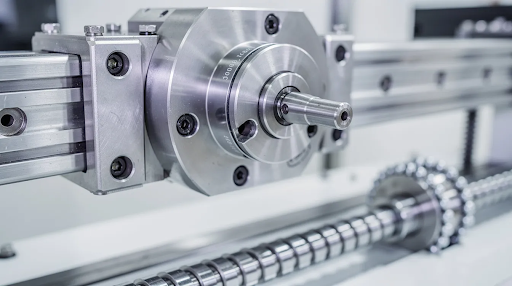
Look for a rigid steel or cast-aluminum frame, precision linear rails on all axes, ball screws with minimal backlash, and sealed bearings designed for high-chip-load environments. This construction maintains accuracy over time and produces consistent surface finishes even under aggressive cutting in aluminum or hardwood.
Enclosure Design
Full-height panels should allow clear viewing of the work process while maintaining containment. Large polycarbonate or acrylic viewing windows, gasketed doors, and interlocked latches that stop the spindle and feed when opened are essential. The enclosure must be capable of containing not just dust but heavier chips from metals and composites.
Control and Electronics
An industrial-grade motion controller with a clear interface simplifies operation. Ethernet or USB connectivity, along with an accessible electrical cabinet and proper cable management, reduce troubleshooting time. The software should be user-friendly and support standard G-code or integrate with common CAD/CAM platforms like AutoCAD-derived outputs.
Tool Handling
For production-oriented systems, an auto tool changer reduces manual interventions during multi-tool jobs. Entry-level enclosed machines typically feature manual tool change with repeatable tool length setups. The choice depends on job complexity and volume expectations.
Chip and Dust Management
Integrated chip pans, ports for external dust collectors, optional mist or coolant management, and easy-to-clean interior surfaces are all important. A properly sized vacuum or dust collection system matched to the machine’s chip production rate keeps the workspace clean and extends spindle bearing longevity.
Material Capability
Production-grade enclosed systems should cut wood, MDF, plastics, aluminum, and non-ferrous metals reliably. Higher-performance systems can handle light steel work with appropriate tooling and feeds. The spindle power and speed range determine what materials are practical for sustained production versus occasional prototyping.
Safety, Standards, and Education Use
Safety is the primary driver for enclosed CNC adoption in classrooms, high schools, colleges, and public maker spaces across North America. Institutional risk assessments and insurance requirements increasingly favor machines with documented interlock performance and emergency stop functionality.
Interlock Systems and Operating Zones
Door interlock switches pause spindle rotation and axes motion when the enclosure door is opened. Emergency stops mounted on the front of the enclosure provide rapid machine shutdown. Clear operating zones on the floor around the machine help establish safe boundaries for students and visitors.
Standards Compliance
CSA-compliant components simplify approvals for new lab installations in Canadian schools. A machine with documented safety specifications is more likely to satisfy institutional risk management than a consumer desktop system without formal certification. This matters for programs intended to persist over multiple years and cohorts of students.
EMPOWER[ED] ACADEMY and Curriculum Integration
Simply Technologies’ ACADEMY Series and EMPOWER[ED] ACADEMY provide a 16-session curriculum, CAD/CAM training, and teacher onboarding built around safe use of enclosed CNC routers in real classroom settings. This structured approach combines machine operation with certification pathways, giving instructors a framework for integrating CNC skills step-by-step.
- Enclosed CNC systems form the foundation of long-term education programs. Explore the machine lineup to see which models fit classroom and lab environments.
Enclosed CNC Machines With Laser Capability
Many users want a single enclosed platform to handle CNC routing plus light laser cutting or engraving, especially for thin wood, cardboard, acrylic, and paperboard. This approach can work within limits.
There is a meaningful difference between inexpensive bolt-on diode lasers and dedicated CO2 laser systems. Safety depends heavily on a true enclosure with proper sealing and exhaust. A poorly integrated laser head creates beam scatter and fume hazards that a CNC enclosure may not address without modification.
An enclosed CNC router can be paired with a laser head for specific materials and thicknesses, ideal for occasional marking and simple cuts on the same workholding setup. High-duty-cycle laser work involving intricate cuts, fine engraving, or sustained production is usually better handled by a dedicated enclosed CO2 laser machine with purpose-built optics and cooling.
- Simply Technologies offers laser systems as complementary tools for engraving, signage, and packaging prototypes. View laser machines and accessories.
Any laser-capable enclosed CNC setup should integrate door interlocks that interrupt laser operation when opened, fume extraction to the outside or through filtered units, and appropriate signage. Operators should be protected by system design rather than relying solely on laser safety glasses.
Simply Technologies Enclosed CNC Lineup and Upgrade Path
The SIMPLY → DISCOVERY → PERFORMANCE → PERFORMANCE ATC progression provides a structured way for shops and schools to scale from entry-level to higher capability without adding operational complexity.
SIMPLY Series
The SIMPLY Series serves as the starting point for enclosed CNC routing in small labs or prototype rooms. These machines focus on simple operation and compact footprint, making them accessible to new users while maintaining the enclosure, interlock, and dust management features that production environments require.
DISCOVERY and PERFORMANCE Series
DISCOVERY and PERFORMANCE Series machines increase working area, rigidity, and duty cycle. They handle production woodwork, plastics, and aluminum parts in small manufacturing shops where more power and speed translate directly to throughput. Construction with steel frames and precision linear guides supports accurate, repeatable cuts job after job.
PERFORMANCE ATC
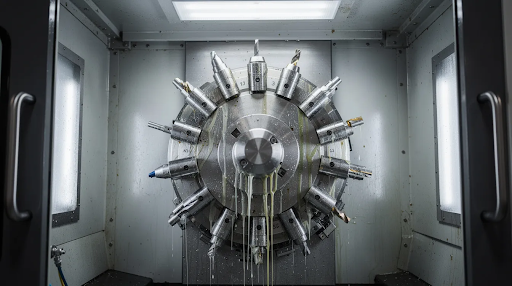
PERFORMANCE ATC adds automatic tool changing inside the enclosure. This capability reduces manual interventions, cycle babysitting, and setup time for multi-tool jobs. For shops running production parts that require multiple cutters per operation, ATC functionality is a game-changer for workflow efficiency.
Explore the full CNC product lineup to see detailed machine descriptions and identify the right entry point for your application.
Support, Installation, and Real-World Use Cases
Enclosed CNC systems perform best when properly installed, leveled, and matched to the user’s material and workflow requirements. Taking time to assess power requirements, dust collection sizing, and shop layout before delivery avoids common setup problems.
Simply Technologies as a Technical Resource
Simply Technologies provides pre-sales application review, phone-based machine selection guidance at 800-288-2961, and recommendations for dust collection and power requirements. This support helps buyers match the right machine to their specific process rather than over- or under-investing in capability.
Real-World Scenarios
Small furniture shop (2024–2025): A cabinet maker cutting custom components and decorative inlays uses an enclosed CNC router positioned ten feet from the finishing area. The enclosure contains dust and chips, preventing contamination of freshly finished pieces and reducing cleanup between jobs.
High school tech lab (2024–2025 school year): A technology education program runs 16-session CNC projects with rotating student groups. Door interlocks and clear viewing windows allow instructors to supervise multiple students safely while teaching CAD/CAM fundamentals using the EMPOWER[ED] ACADEMY curriculum.
Maker space (ongoing): A community maker space produces short-run aluminum brackets and custom acrylic panels for members’ projects. The enclosed system’s contained operation keeps adjacent office and member lounge areas free from chips and noise, maintaining a professional environment.
Training and Ongoing Service
Remote support, basic CAM workflow coaching, and help integrating accessories like rotary attachments or vacuum tables inside the enclosure are available. This ongoing relationship ensures the machine continues to deliver reliable results as users expand their capabilities and take on new materials.
FAQ
What budget range should I plan for an enclosed CNC machine?
Serious enclosed CNC routers for production shops and schools typically start above entry-level hobby prices. Expect entry-level enclosed systems suitable for light production and education in the $5,000–$10,000 range. Mid-range systems with larger working areas, more power, and higher rigidity fall between $10,000–$25,000. Higher-performance systems with auto tool changers and production-grade duty cycles exceed $25,000–$30,000. Money spent on a properly enclosed, interlock-equipped system delivers value through reduced cleanup, better safety compliance, and longer service life compared to cheaper open alternatives.
Can I retrofit an enclosure onto my existing open CNC router?
DIY enclosures are common but may not include certified interlocks or proper airflow. A homemade enclosure might reduce dust and noise but likely lacks the door switches that pause spindle and axis motion when opened. Without these safety features, the retrofit does not meet the standards required for school or shared-space installations. Users should evaluate whether upgrading to a purpose-built enclosed system is safer and more reliable long-term than attempting a retrofit that cannot be properly certified.
What kind of dust collection and ventilation do I need?
For woodworking applications, a 1.5–3 HP dust collector connected to the enclosure’s dust port handles most chip and dust loads. Aluminum and brass machining benefits from chip trays or shop vacuum collection below the cutting area, as metal chips are heavier and less suited to traditional dust collection. If a laser head or nearby laser system is used, fume extraction venting to the outside or through filtered units is essential to remove cutting byproducts from materials like acrylic and MDF.
How difficult is it to teach students on an enclosed CNC?
Enclosed CNCs are often easier to supervise in labs because the door interlocks create clear operating boundaries. When the door is open, the machine does not run. The EMPOWER[ED] ACADEMY 16-session curriculum helps instructors integrate CAD/CAM training and machine operation step-by-step, providing lesson plans, project files, and assessment frameworks. Teachers without prior CNC experience can work through the onboarding process and deliver a complete program with proper support.
When does it make sense to add a dedicated CO2 laser instead of a laser head on the CNC?
High-volume engraving, intricate paperboard and acrylic cutting, and very precise detail work are better suited to a dedicated enclosed CO2 laser. These machines offer optimized optics, cooling systems, and material handling designed specifically for laser processing. A laser head mounted on a CNC router is ideal for occasional marking and simple cuts where you want to use the same workholding setup as your routing jobs. If laser work will represent a significant portion of your production, a dedicated laser machine delivers better results and higher throughput than a bolt-on solution.