
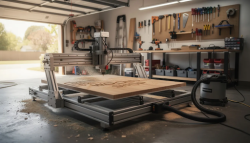
From Hobbyist to Small Business: Scaling With the Right CNC Equipment
Key Takeaways The move from hobby CNC to business hinges on picking scalable equipment, realistic pricing, and repeatable workflows You can start earning with a compact benchtop CNC, then grow into larger gantry systems as orders increase Simply Technologies focuses
Read More »
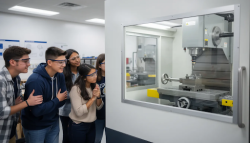
Why Enclosed CNC Machines Matter for Schools and Shared Workspaces
Key Takeaways Enclosed CNC machines dramatically improve safety, cleanliness, and noise control in schools, makerspaces, and shared office environments Simply Technologies focuses on enclosed CNC systems specifically designed for education and shared environments, not just generic industrial shops Enclosures enable
Read More »
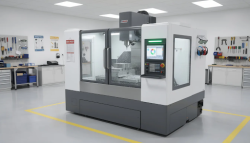
CNC Training for Educators: How to Teach CAD and CNC With Confidence
Key Takeaways This article is designed for teachers, lab managers, and instructors who want to deliver modern CAD/CAM and CNC training without needing a manufacturing background. Simply Technologies focuses on making industrial CNC concepts teachable in school, college, and makerspace
Read More »
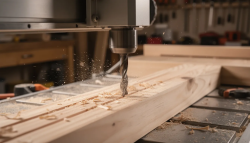
What to Look for in a CNC Controller for Beginners and Growing Shops
Key Takeaways An easy web-based interface, clear documentation, and responsive support dramatically reduce the learning curve for first-time CNC users Your controller should grow from hobby or prototype work into small production without requiring a complete replacement Simply Technologies focuses
Read More »
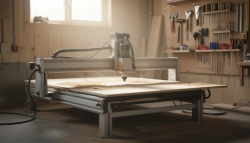
How Small Shops Can Compete With Larger Manufacturers Using CNC Automation
Key Takeaways CNC automation allows a 3–10 person shop to match the speed, precision, and consistency of much larger manufacturers without adding headcount. Modern CNC routers and mills, like those integrated by Simply Technologies, can turn multi-hour manual jobs into
Read More »
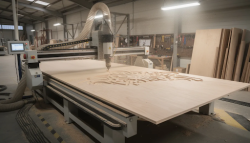
The Real Difference Between Entry Level CNC Routers and Production Machines
Key Takeaways Entry level cnc routers (typically $1,000–$15,000) are designed for learning, prototyping, and light commercial work with duty cycles of 1–4 hours per day, while production machines ($40,000+) are engineered for multi-shift, 24/7 industrial output The core differences extend
Read More »

How to Build a Safe CNC Classroom Without Overcomplicating It
Key Takeaways Any school can build a safe cnc classroom by combining clear rules, basic personal protective equipment, and age-appropriate machines instead of expensive, complex systems. A well-planned layout with clear walkways, visible emergency stops, and a supervised operator zone
Read More »
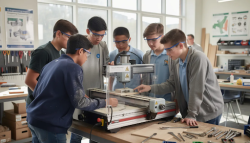
CNC Machines for Schools: What Educators Need to Know Before Buying
Key Takeaways Schools must decide between desktop versus full-size CNC, router versus mill or lathe, and simulator versus real machine based on their specific program goals and student populations. Simply Technologies focuses on education-ready CNC solutions, comprehensive support, and training
Read More »
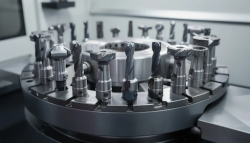
What an Automatic Tool Changer Really Saves You in Time and Cost
Key Takeaways An automatic tool changer on a CNC machine primarily saves spindle hours, labor minutes, and consumable costs compared to manual tool changes—with typical ATC swaps completing in 6-12 seconds versus 45-120 seconds manually. For most small to mid-size
Read More »
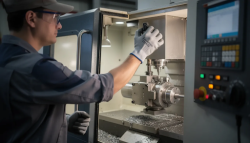
Signs Your Shop Has Outgrown Manual Tool Changes
Key Takeaways This article helps CNC shop owners quickly decide if it’s time to move beyond manual tool changes and invest in automation. Frequent manual tool swaps, idle machines, and overtime are clear signs the current workflow is holding your
Read More »
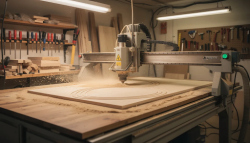
Desktop CNC vs 2×4 CNC Machines: Which Is Right for Your Workflow
Key Takeaways Desktop CNCs (work areas around 12”×12” to 24”×36”) are ideal for small parts, custom signs, prototyping, and tight shop spaces where a benchtop machine makes sense. 2×4 CNC machines (approximately 24”×48” cutting area) excel at furniture components, cabinet
Read More »
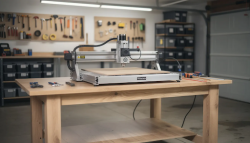
Small Format CNC Machine: How to Choose the Right One for Your Shop Space
Key Takeaways Small format CNC machines (with cutting areas under approximately 24” x 36”) deliver professional results in garages, sheds, basements, and compact commercial shops without requiring a dedicated room. The right machine balances footprint, usable work area, frame rigidity,
Read More »