
Key Takeaways
- Disciplined daily and weekly checks, combined with periodic deep inspections, are the fastest path to reducing unplanned downtime in any CNC shop.
- Proper lubrication, chip and coolant management, and axis calibration represent the three highest-impact maintenance habits you can establish.
- Documenting issues and maintenance history moves small shops from constant firefighting to planned, low-stress maintenance cycles.
- Even shops without dedicated maintenance staff can implement effective routines by training operators on basic inspection tasks.
- Simply Technologies can provide guidance, troubleshooting support, and modern monitoring tools without requiring you to hire a full in-house maintenance department.
Introduction: Why CNC Maintenance Matters When Every Hour Counts
A single spindle crash or axis failure can wipe out an entire day’s production in small and mid-size shops. When you’re running tight margins and facing delivery dates that don’t budge, that lost day translates directly into missed revenue, angry customers, and scrambled scheduling for the rest of the week.
The typical shop scenario in 2024-2025 looks something like this: aging vertical machining centers running double shifts, operators stretched thin, and budgets that make replacing equipment feel like a distant dream. Modern manufacturing demands more from these machines than ever before, yet many shops still operate without a structured approach to keeping them running.
This article is a practical, basics-first guide aimed at shops that run mills, lathes, or routers and simply cannot afford machines sitting idle waiting for parts or a technician. The focus here is on straightforward routines, checklists, and habits that any shop can implement without buying new CNC equipment.
Simply Technologies serves as a partner for shops looking to standardize their CNC maintenance approach and reduce downtime through consulting, training, and modern digital tools. Whether you need help building your first maintenance program or optimizing an existing one, they can help you get there without the guesswork.
Understanding Your CNC Machine: What You’re Really Maintaining
When we talk about CNC machine maintenance, we’re not just discussing oil changes and filter swaps. You’re caring for interconnected mechanical, electrical, and control systems that all affect accuracy, repeatability, and uptime. Understanding what each system does helps you log better symptoms when something goes wrong, which dramatically speeds troubleshooting.
Mechanical Components
Your CNC machine relies on precision mechanical components to produce parts accurately. Here’s what matters most:
| Component | Function | Signs of Wear |
| Spindle | Rotates cutting tools at high speeds | Excessive vibration, poor surface finish, heat |
| Ball screws | Convert rotary motion to linear movement | Backlash, positioning errors, unusual noise |
| Linear guides | Provide smooth, accurate axis travel | Chatter marks, inconsistent cuts |
| Way covers | Protect precision surfaces from chips and coolant | Torn or damaged sections, contamination |
| Tool changers | Automate tool swapping | Missed tool grabs, positioning errors |
| Chucks/turrets | Hold workpieces or tooling | Runout issues, grip problems |
When wear develops in these areas, it shows up as chatter, poor finishes, dimensional variation, or outright scrap. Catching signs of wear early prevents unexpected breakdowns that halt production.
Electrical and Control Systems
The electrical components of your CNC machine form the brain and nervous system of the operation:
- Drives and motors control axis movement and spindle rotation
- Encoders provide position feedback for precise control
- I/O boards handle communication between components
- Control pendants allow operator interaction
- Power supplies deliver stable current to all systems
Problems with electrical systems often manifest as intermittent faults, axis alarms, or positioning errors that seem random. Regular inspections of loose connections and wiring integrity prevent these frustrating issues.
Support Systems
Your machine’s support systems directly impact longevity and performance:
- Coolant system: Removes heat, flushes chips, and extends cutting tool life. Failures here lead to overheating, premature tool wear, and poor surface finishes.
- Lubrication system: Keeps ball screws and linear guides properly lubricated. Without it, precision surfaces wear rapidly.
- Air supply and filtration: Powers pneumatic systems and keeps contamination out of sensitive areas.
Understanding these subsystems helps operators describe problems accurately, which makes troubleshooting faster and more effective.
Daily and Weekly CNC Maintenance Tasks That Prevent Downtime
Here’s a reality check: 5-15 minutes per shift of routine checks is dramatically cheaper than a lost day waiting on a field technician. The math isn’t complicated—preventive maintenance beats reactive repairs every time.
Daily Operator Checks
Train your operators to complete these tasks at the start or end of every shift:
- Wipe down the work area and clean chips from the table and guards
- Visually inspect way covers for damage or debris buildup
- Check coolant levels and verify concentration is within spec
- Confirm air pressure reads correctly and drain water from air lines
- Listen for new or unusual noises during startup
- Verify all indicator lights function properly
- Test emergency push buttons for proper operation
These routine inspections take minutes but catch potential issues before they become production-stopping failures.
Weekly Maintenance Tasks
Set aside time each week for slightly deeper checks:
- Inspect toolholders and pull studs for wear, cracks, or damage
- Check the spindle nose for cleanliness and contamination
- Test all emergency stops and interlocks
- Inspect hoses and cables for visible damage, kinks, or wear
- Verify coolant nozzle aim and flow
- Check hydraulic systems for leaks or low fluid levels
- Clean and inspect cooling fans and vents
- Test coolant concentration with a refractometer
Weekly testing catches concentration drift before it affects machining quality and helps you avoid costly downtime from preventable failures.
Simply Technologies can help your shop build a custom daily and weekly maintenance checklist template tailored to each machine model you run.
Monthly and Annual Maintenance: The Deep Dives That Save Machines
Deeper inspections should be scheduled during known slow periods to avoid disrupting critical jobs. Planning these maintenance tasks around your production schedules keeps your shop running smoothly while still extending equipment life.
Monthly Tasks
Monthly maintenance goes beyond quick visual checks:
- Check and top up lubrication reservoirs
- Clean or replace air and coolant filters
- Inspect belts and couplings for wear or misalignment
- Check backlash and axis play using indicator checks
- Perform thorough cleaning by removing panels to clean internal components
- Inspect screw tightness and mark positions for quick reference
- Clean circuit boards and blow away accumulated dust from control boards
- Check all accessible electrical connections for tightness and corrosion
Quarterly and Semi-Annual Tasks
Every three to six months, dig deeper into these areas:
- Check spindle runout and radial and end play
- Inspect electrical cabinets thoroughly and tighten terminals
- Verify ground connections are secure
- Clean and inspect cooling fans and heat sinks
- Remove and clean the chuck and jaws, checking for wear
- Inspect the spindle taper for damage or contamination
- Check chuck cylinder operation and hydraulic pressure
Annual Tasks
Once per year, schedule comprehensive inspections:
- Complete geometry check including squareness and straightness
- Detailed ball screws and guideway inspection
- Replace worn way wipers and seals
- Full review of alarm and error history
- Complete coolant system service with tank removal and thorough cleaning
- Hydraulic system maintenance including oil testing and filter replacement
- Review and update software to the latest version available
Keeping each time frame clearly separated in your maintenance documentation ensures nothing falls through the cracks. Proper care at these intervals can significantly extend machine lifespan.
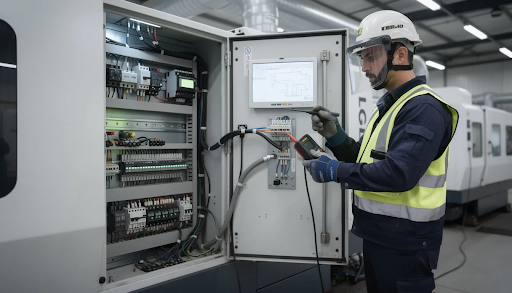
Common CNC Maintenance Pain Points for Small Shops
Shops that can’t spare a backup machine or a full-time maintenance technician face predictable obstacles. Understanding these challenges helps you plan around them.
Typical Constraints
Most small shops deal with some combination of these limitations:
- Limited maintenance staff with other responsibilities
- Machines running two shifts with no scheduled downtime windows
- Budget pressure to postpone non-urgent repairs
- Lack of spare parts inventory for common wear items
- Knowledge concentrated in one or two experienced staff members
Recurring Technical Issues
Several technical problems show up repeatedly across shops:
Excessive vibration often stems from worn bearings, unbalanced tooling, or loose components. Left unchecked, unusual vibrations accelerate wear on spindles and precision surfaces.
Axis alarms from contamination or lubrication issues create frustrating intermittent faults. These electrical issues typically trace back to dirty encoders, contaminated way surfaces, or depleted lubricant reservoirs.
Coolant-related corrosion damages machine components and workpieces alike. Bacterial growth in coolant systems accelerates in warm weather and creates both smell issues and surface quality problems.
Overheating drives or spindle motors signal cooling system failures or excessive cutting parameters. A faulty cooling system can lead to costly spindle rebuilds or replacements.
Early Warning Signs to Watch
Catching small symptoms early prevents full stoppages:
- Minor axis noise during rapid moves
- Warm servo motors that weren’t warm before
- Coolant leaks around fittings or hoses
- Slight changes in surface finish quality
- Recurring issues that clear after machine restart
Simply Technologies can assist remote shops through remote diagnostics, log reviews, and step-by-step troubleshooting plans so you don’t have to guess at root causes.
Building a Practical Maintenance Schedule for Zero-Slack Shops
Copy-paste schedules pulled from machine manuals often fail in real shops that run mixed materials, different shifts, and varying environmental conditions. Your schedule needs to reflect your actual operations.
Prioritizing Machines
Not all machines deserve equal attention. Focus your strictest schedules on:
- High-revenue machines that produce your most profitable parts
- Bottleneck equipment that constrains overall shop throughput
- Machines with known reliability issues or age-related concerns
- Computer numerical control equipment running your most critical CNC operations
These machines get first priority for maintenance windows and fastest response when issues occur.
Fitting Maintenance Around Production
Use natural production gaps as maintenance windows:
- Weekend hours when the shop is otherwise idle
- Job changeovers when the machine is already stopped
- Program prove-outs when you’re waiting for first-article approval
- Material delays when operators are available but waiting on stock
- Tooling changeover windows between different job setups
These small windows add up to significant maintenance time without impacting producing parts schedules.
Creating Your Maintenance Calendar
Build a simple system that answers three questions:
- Who is responsible for each task?
- What exactly needs to be done?
- How should completion be recorded?
A shared spreadsheet, wall calendar, or digital scheduling tool all work—the key is consistency and visibility. Nothing should rely on memory alone.
Simply Technologies can help convert paper or ad-hoc lists into a realistic, shop-specific maintenance plan that respects your actual production constraints.
From Reactive to Proactive: Using Data and Checklists to Avoid Surprises
The typical “run until it breaks” approach leads to emergency service calls, rush shipping on worn parts, and missed due dates. Lost productivity from unexpected breakdowns always costs more than planned maintenance.
Moving Beyond Firefighting
Even without expensive sensors, shops can shift toward proactive maintenance using structured checklists, logbooks, and consistent reporting of alarms and faults. The goal is predictive maintenance behavior built on actual machine data.
Basic Data to Track
Start logging these data points for each machine:
| Data Point | Why It Matters |
| Spindle hours | Shows actual usage vs. calendar time |
| Major alarm codes | Reveals patterns in failures |
| Tool breakage patterns | Identifies programming or material issues |
| Coolant change dates | Ensures timely system maintenance |
| Filter replacements | Tracks consumable life cycles |
| Crash or near-miss incidents | Highlights training or programming needs |
This minimal tracking provides significant benefits when troubleshooting trends over months and years.
Adding Basic Monitoring
More advanced shops can add inexpensive monitoring for earlier failure prediction:
- Vibration sensors on spindle housings
- Temperature monitoring on drives and motors
- Current monitoring on axis motors
- Coolant flow sensors
These additions help identify potential issues before they cause failures.
Simply Technologies specializes in helping shops interpret their machine data and set alert thresholds so maintenance can be scheduled before breakdowns occur.
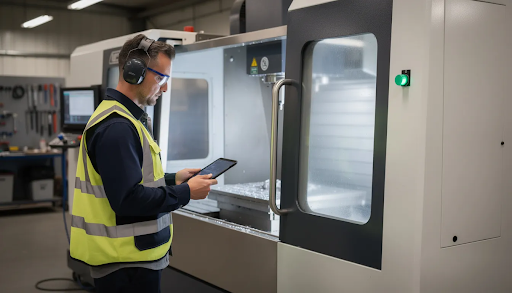
Training Your Team: Making Maintenance Everyone’s Job
The most reliable shops treat effective maintenance as a shared responsibility between operators, programmers, and management. This proactive approach distributes knowledge and catches problems faster.
Essential Training Topics
Cover these areas with your staff members:
- How to follow a maintenance checklist consistently
- How to recognize early warning signs including unusual noises, finish changes, and alarms
- Proper cleaning techniques that protect rather than damage surfaces
- Basic safety when working around live machines
- How to document and report issues clearly
Training Format That Works
Short, recurring sessions work better than marathon seminars:
- 10-15 minute toolbox talks before shifts
- Quick demonstrations during job changeovers
- Hands-on practice during scheduled maintenance windows
- Monthly review of common issues and diagnostic tools usage
Cross-Training for Resilience
Train at least one operator per shift on basic troubleshooting:
- Resolving homing errors and reference point issues
- Clearing simple tool change faults
- Addressing coolant system problems
- Recognizing syntax errors in the CNC program
- Running a backlash program for axis verification
This reduces dependence on a single “machine guru” and creates a safer working environment where problems get addressed quickly.
Simply Technologies can provide structured training materials and remote sessions tailored to the machines and control brands in your shop.
FAQ
How often should a busy shop service its CNC spindle if it runs two shifts?
High-duty spindles should be checked for temperature, noise, and runout monthly at minimum, with a deeper inspection and data recording at least once per year. Abusive conditions like heavy cuts, poor balancing, or constant tool changes may require shorter intervals. Tracking spindle hours provides more accurate service timing than calendar-based schedules alone. Simply Technologies can help establish spindle health baselines so future changes are easier to spot and address before they cause costly downtime.
What is the easiest maintenance habit to start if we have no formal program yet?
Start with a simple daily checklist covering chip cleaning, coolant and air checks, basic visual inspections, and logging any alarms or unusual behavior. Keep the checklist to a single page that takes under 10 minutes to complete—this ensures operators will actually do it consistently. Review completed checklists weekly so management can spot patterns and recurring issues early before they become major repair costs.
Do we really need to shut the machine down for inspections if we are already behind schedule?
Short, planned pauses of 15-30 minutes weekly per machine typically prevent multi-day outages that occur when components fail unexpectedly. Schedule these pauses during fixture changes, job transitions, or while waiting on material so they minimize production impact. Skipping routine inspections repeatedly transforms small, inexpensive fixes into large, high-cost failures requiring rush orders for parts and emergency technician calls.
What kind of records should a small shop keep to improve maintenance without a dedicated system?
Keep a simple binder or shared spreadsheet logging dates, tasks performed, issues found, replaced parts, and major alarms for each machine. Include spindle hours or part counts if your control provides them, along with notes on crashes or near-misses. This minimal record keeping makes it far easier for Simply Technologies or your in-house staff to troubleshoot trends and predict when components need attention.
When should we call in outside help instead of handling CNC issues ourselves?
Repeated axis alarms, unexplained electrical faults, spindle bearing noise, or geometry issues that persist after basic checks clearly signal the need to involve a specialist. Avoid repeatedly resetting alarms or overriding interlocks without understanding the root cause—this creates operator safety and reliability problems that compound over time. Simply Technologies can often diagnose issues remotely first, helping you determine whether a fix is possible in-house or requires on-site support, saving you time and unnecessary service call expenses.